2.4 Chart Reading Example (Yarmouth Airport)
Lesson Progress
Not completed
VNC Legend
Section titled “VNC Legend”The following images show the various symbols that are used on a VNC chart. There is no need to memorize them, but it is important to be able to use them to interpret a chart.
Aerodromes
Section titled “Aerodromes”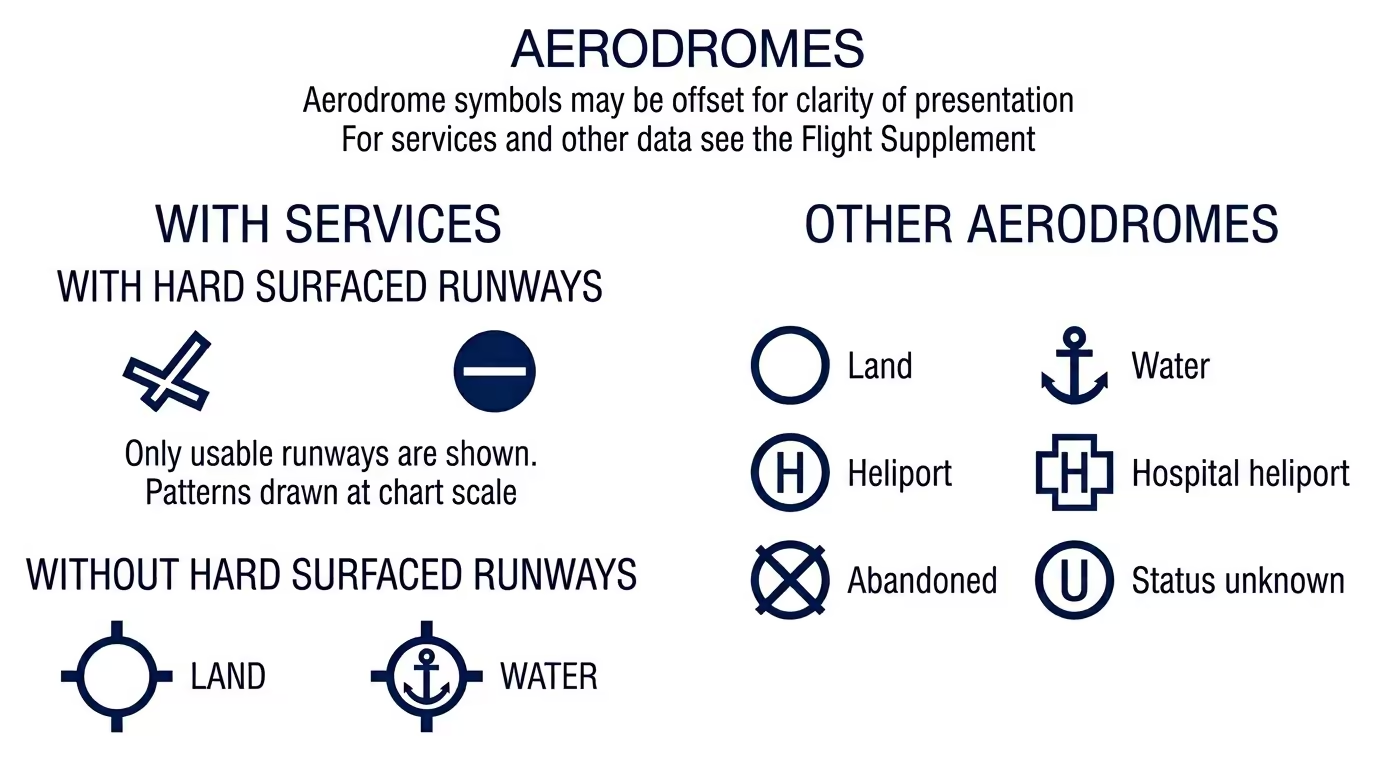
Aerodromes are differentiated by surface type, status, facility type, and availability of services (fuel, customs, lighting, etc.).
Aerodrome Data
Section titled “Aerodrome Data”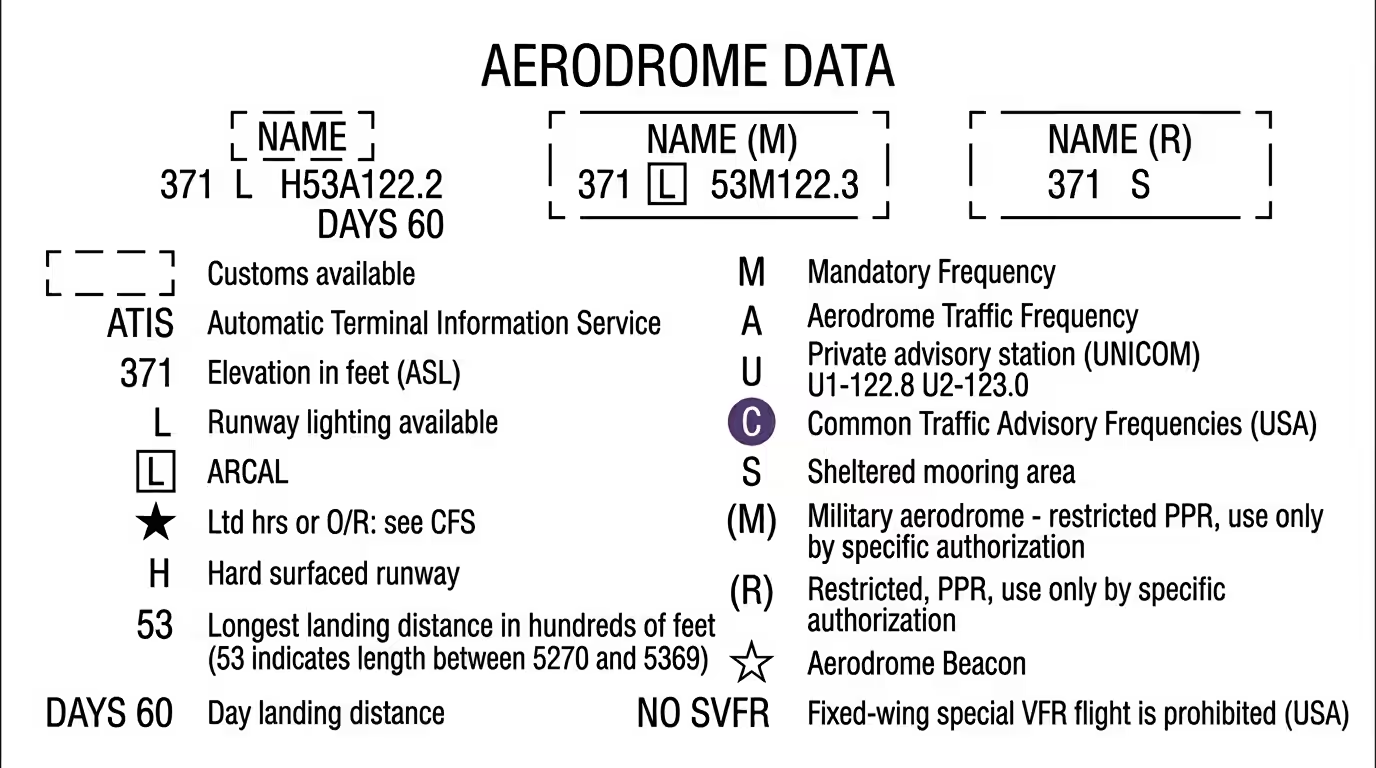
This data usually appears in the vicinity of the aerodrome symbol and provides additional details about the airport and its communication procedures.
Airspace Information
Section titled “Airspace Information”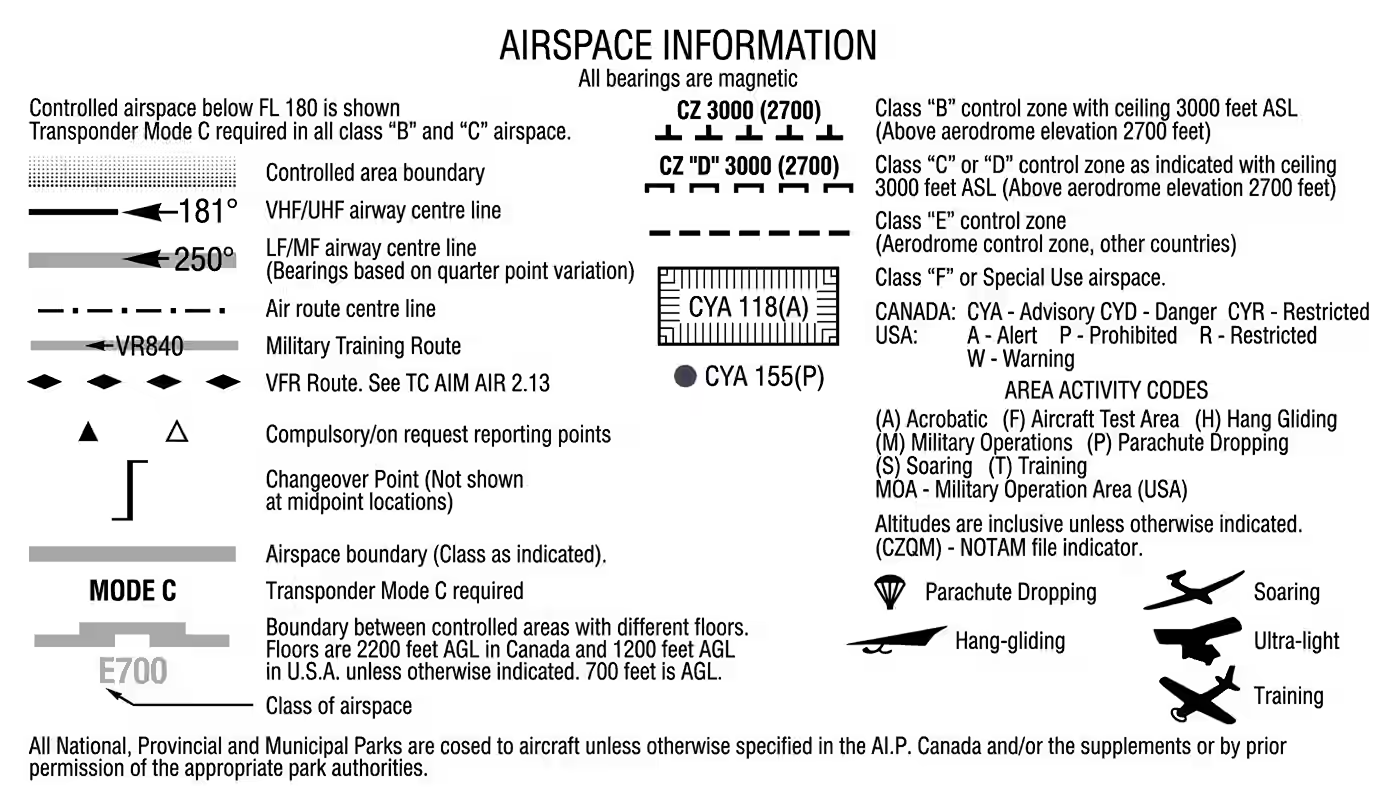
These are the symbols and boundary lines used to show different types of airspace and their altitude limits on the chart, allowing pilots to identify where controlled or special-use airspace begins and ends along a route.
Radio Aids to Navigation
Section titled “Radio Aids to Navigation”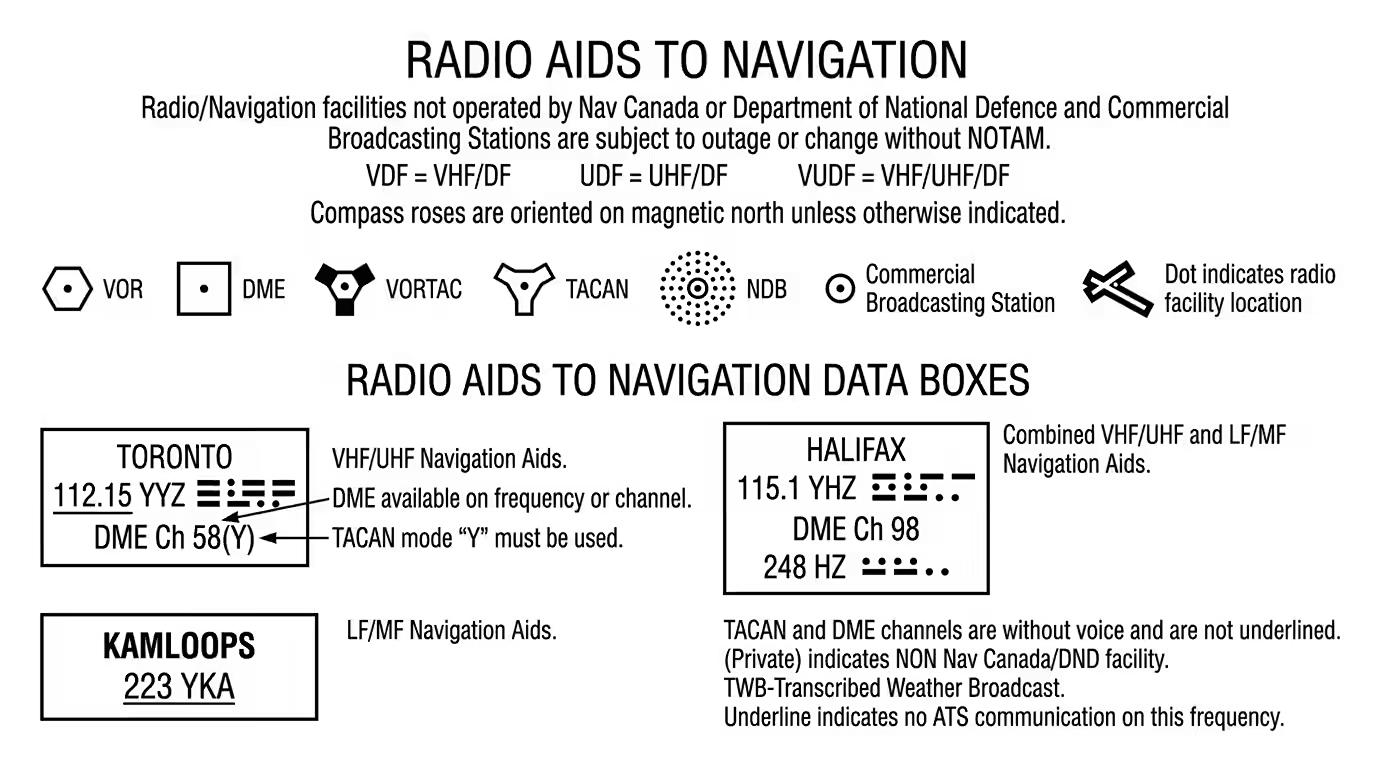
This section shows how ground-based radio navigation transmitters and their associated information are depicted on the chart. These are collectively called NAVAIDs and are used to determine direction and/or position from the station.
Air/Ground Communication Boxes
Section titled “Air/Ground Communication Boxes”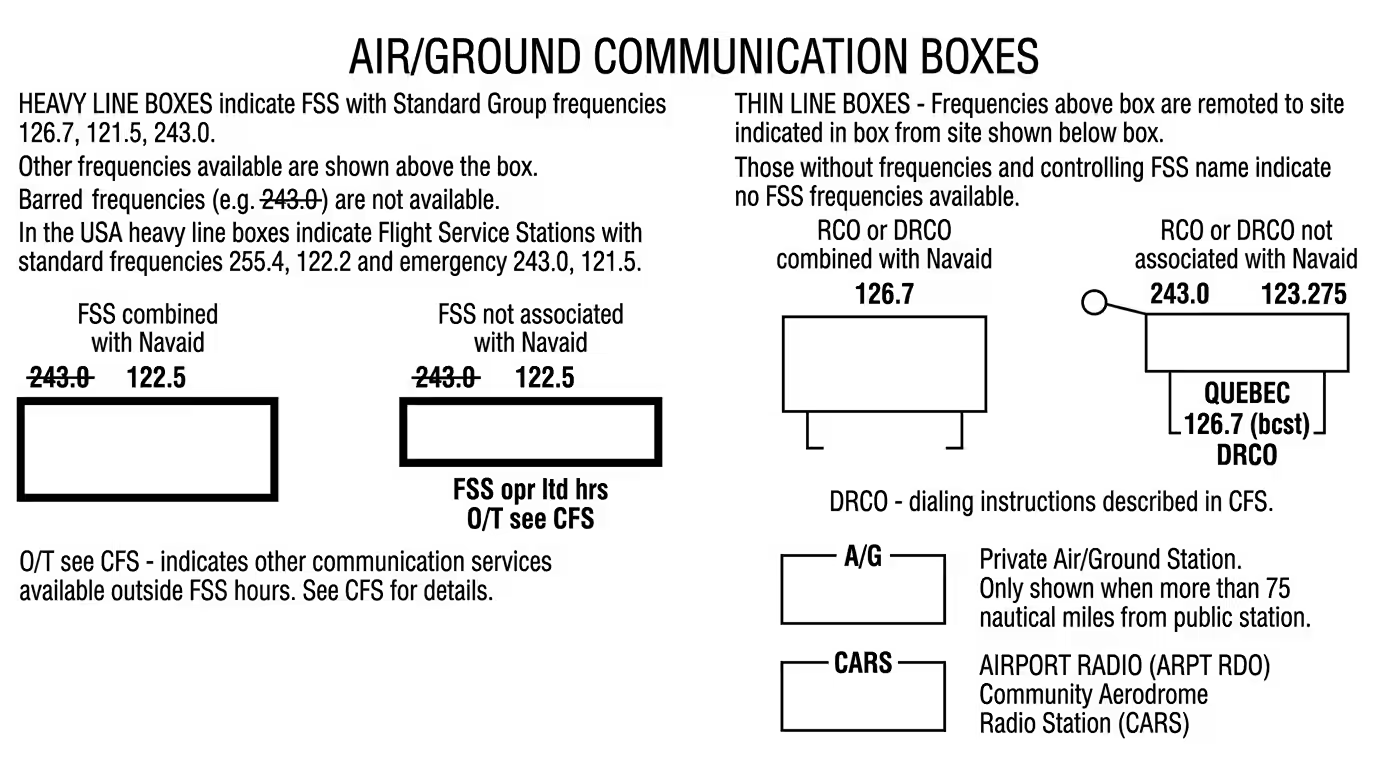
These boxes represent Flight Service Stations (FSS) and other communication facilities that provide air traffic services. The heavy-line boxes indicate FSSs with the standard group frequencies. The thin-line boxes represent remote communications sites that route communications to and from the FSS. These include Remote Communications Outlet (RCO), Dial-up Remote Communications Outlet (DRCO), Private Air/Ground (A/G) station and Community Aerodrome Radio Station (CARS).
Miscellaneous
Section titled “Miscellaneous”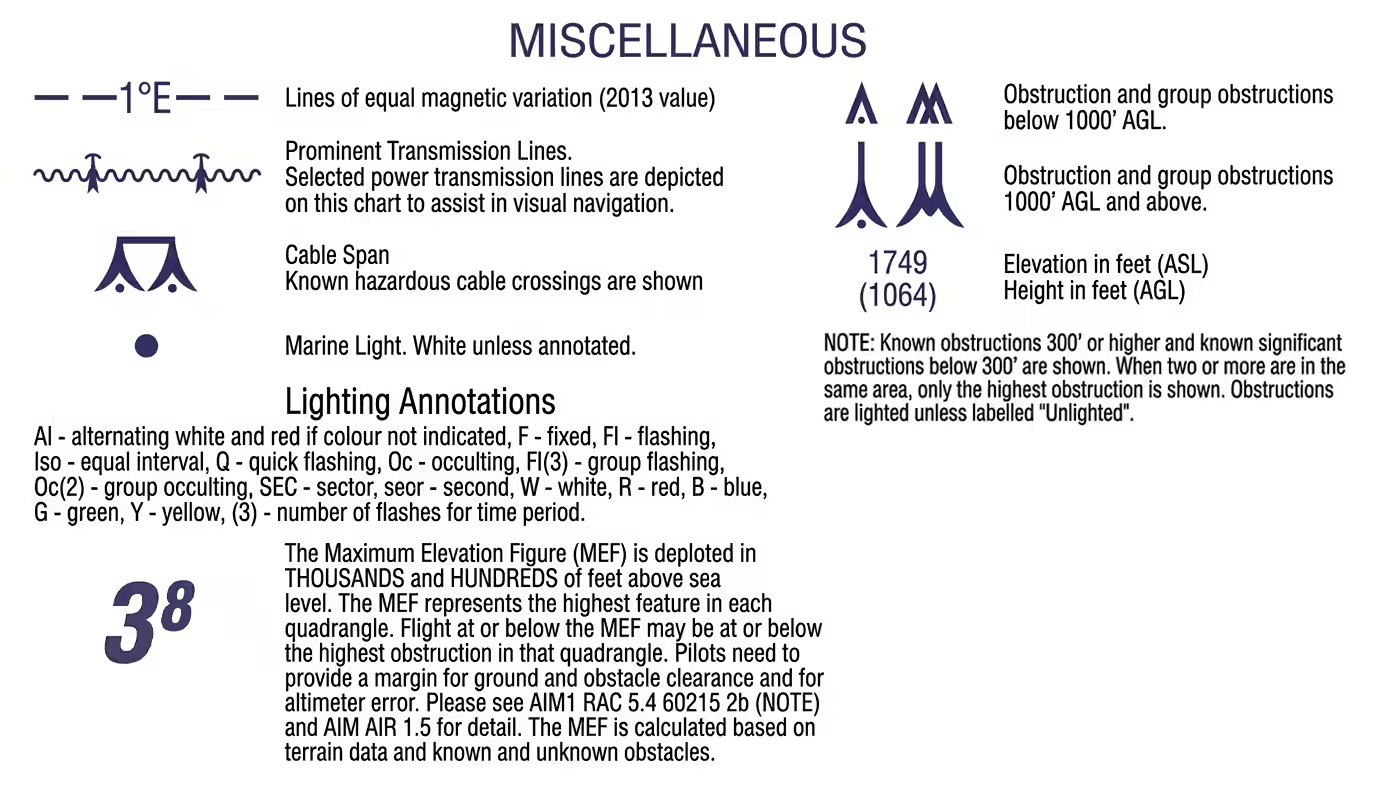
Obstructions, lights, power lines, and the symbol for lines of equal magnetic variation (isogonic lines).
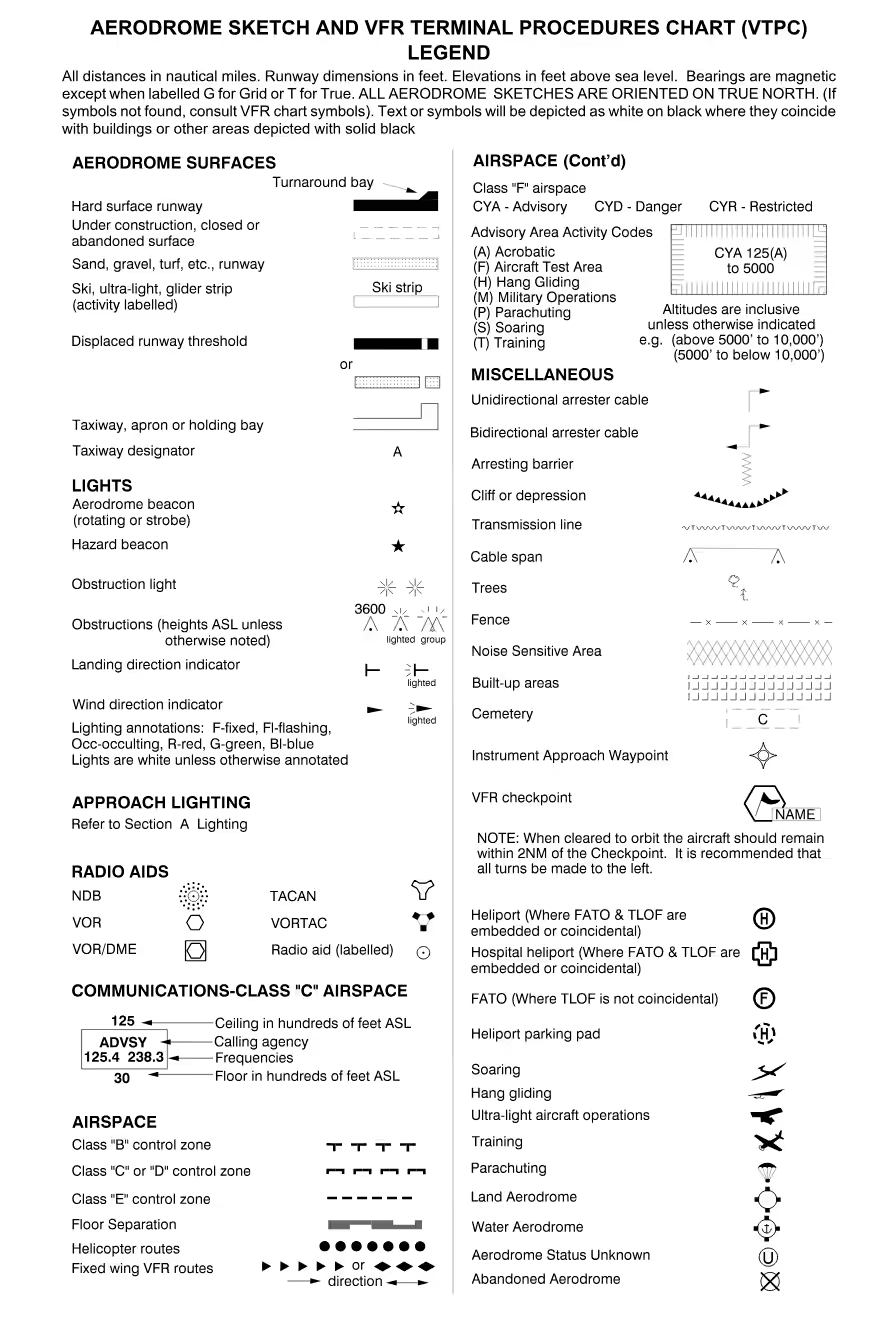
Additional Legends for VFR Charts
Section titled “Additional Legends for VFR Charts”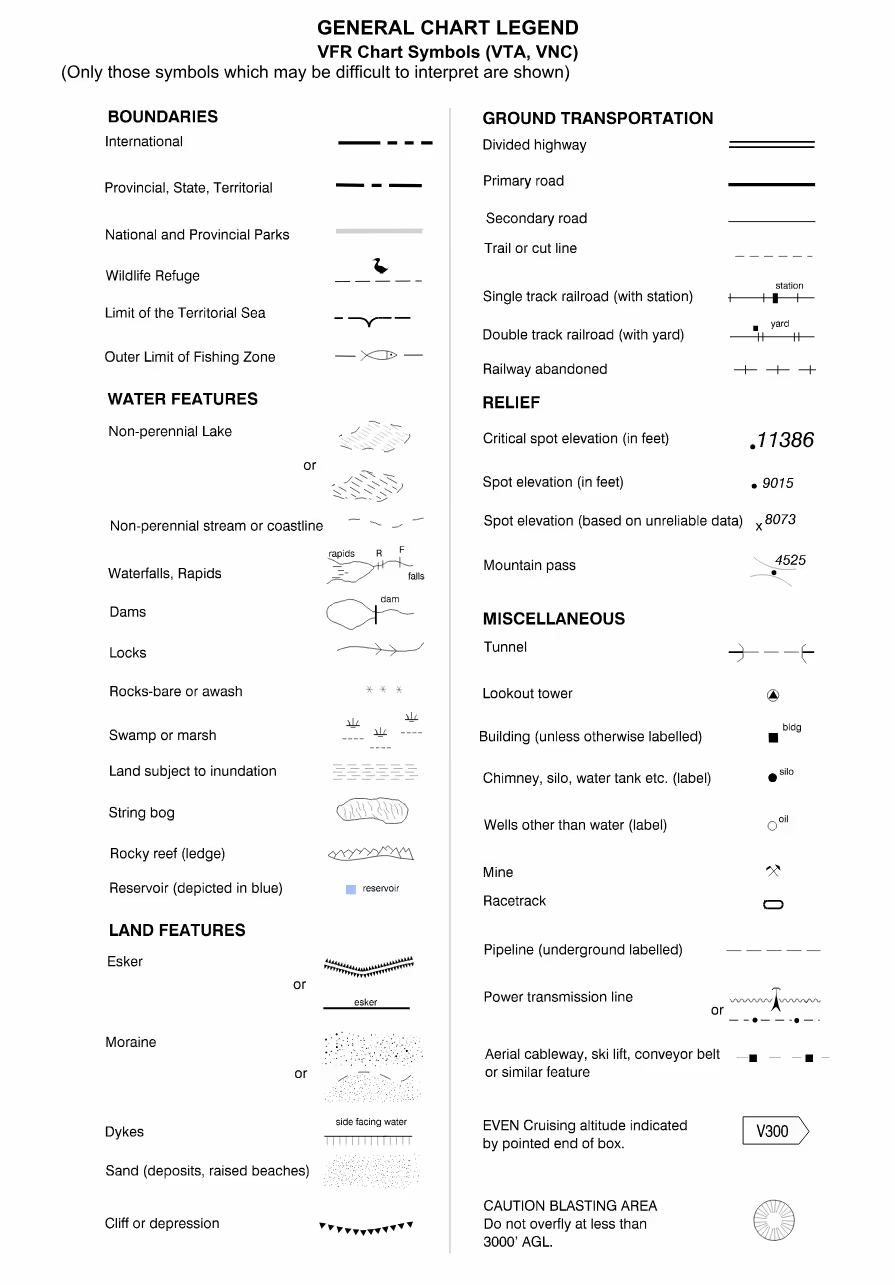
Reading a VNC Chart
Section titled “Reading a VNC Chart”It is crucial to be able to recognize these features on an actual map. Below is a small section of the Halifax VNC centered on Yarmouth. See if you can recognize some of the features.
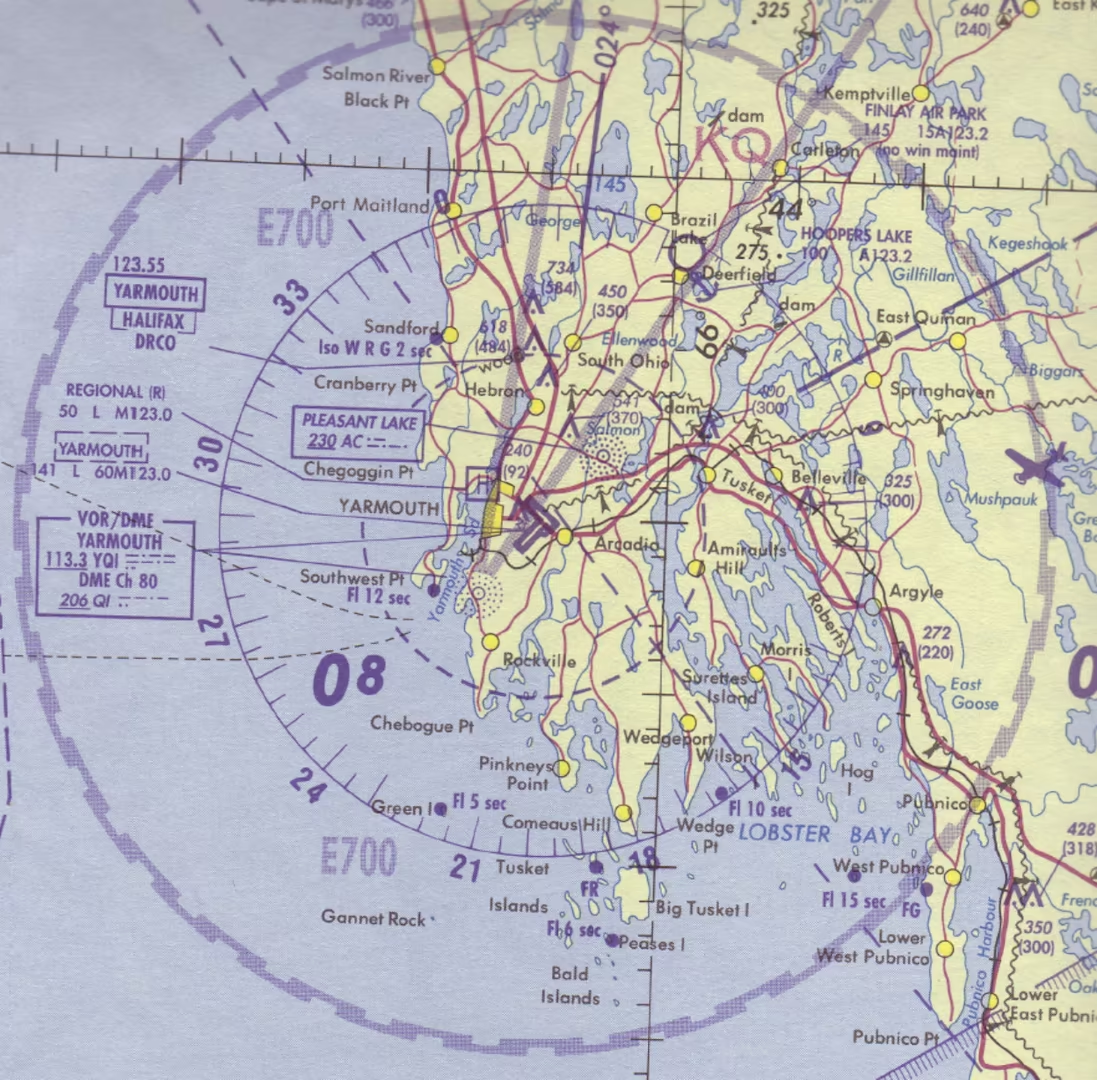
- There is a Class E control zone around the Yarmouth airport;
- The Yarmouth airport frequency is mandatory and is 123.0 MHz. There is no control tower operating. The altitude of the airport is 141’ ASL. Custom services are available at the airport.
- There is a Control Area Extension around the Yarmouth airport. It is Class E with a floor of 700’ AGL. Transponders in the CAE and not mandatory.
- There is a heliport (Regional) just NW of the Yarmouth airport. The Regional frequency is also 123.0 MHz. That makes sense given its proximity to the Yarmouth airport. Having all pilots for both facilities on the same frequency increases safety.
- There is a training area at the East end of the chart. That would indicate that there is a flight school operating at the Yarmouth airport.
- The Yarmouth VOR is on the airport (There is no VOR symbol because it is co-located with the airport). The Yarmouth DME is just SW of the Yarmouth airport. There are two airways associated with this DME. There is another DME (Pleasance Lake) NE of the Yarmouth airport.
- There is an aerodrome (Findlay Airpark) NE of Yarmouth airport. The frequency of the aerodrome is 123.2 MHz. It has a grass runway. There is a water aerodrome (Hooper Lake) just SE of Findley Airpark. Its frequency is also 123.2 MHz.
- The airspace outside the CAE is also Class E. The floor is unknown because it does not show on this small section of the VNC but you should expect it to be higher than 700’ AGL.
- The highest ground altitude within the quadrangle is 800’ ASL. The highest obstruction is 640’ ASL (240 AGL) in the top NE part of the chart.
- There is an isogonic line (line of equal magnetic variation) just East of the Yarmouth airport. The magnetic variation associated with this isogonic line is unknown as it is not shown on this small section of the VNC.